Finding the best senior living alternative in Northwest Houston seldom boils down to a single tour or a glossy pamphlet. Households are managing real restrictions, from traffic on Highway 290 to the timing of a rehabilitation discharge at Houston Methodist Willowbrook. I have sat at cooking area tables in Tomball, Spring, and Jersey Town with adult children who feel the weight of a decision that affects health, finances, and family dynamics. Fortunately: when you comprehend the local landscape and the differences in between assisted living, memory care, respite care, and broader elderly care, the course forward ends up being manageable.
This guide mixes practical detail with regional context, so you can move from worry to a clear plan.
How Northwest Houston Shapes Your Choices
Northwest Houston sprawls, and that matters. The location consists of pockets like Copperfield, Willowbrook, Spring, Klein, Champions, and Cypress, each with its own zoning peculiarities and neighborhood feel. Traffic patterns affect every day life. A five-mile commute on FM 1960 at 5 p.m. can feel longer than fifteen miles at mid-morning. Distance to a preferred health center or a familiar expert might be more crucial than proximity to a member of the family's home. Some families prioritize a neighborhood near a church in Champions or a golf buddy in Cypress; others prefer nearness to outpatient physical treatment near Louetta.
Healthcare gain access to is strong in this passage. Major centers consist of Houston Methodist Willowbrook, HCA Houston Northwest, and Memorial Hermann Cypress. senior living If a loved one has regular cardiology follow-ups or dialysis, check drive times from prospective neighborhoods at the actual hours you will take a trip. It is not a small information; I have actually seen families change communities after recognizing that a 25-minute appointment can turn into a two-hour ordeal as soon as you consider traffic and coordination.
The housing stock likewise affects senior living layouts. Numerous assisted living communities here were purpose-built in the last 10 to 15 years, usually two to three stories with yards, memory care protected wings, and studio or one-bedroom apartments. Smaller sized residential care homes exist too, frequently certified at lower bed counts, tucked into neighborhoods like Champions Forest or off Cypresswood. The option in between a large neighborhood with facilities and a small home with tighter staffing ratios frequently comes down to character and care complexity.
Assisted Living: Independence with a Security Net
Assisted living sits at the center of senior living choices. It is designed for older adults who are mainly independent but take advantage of help with jobs such as bathing, dressing, medication management, and meal preparation. In Northwest Houston, assisted living communities usually use studio, one-bedroom, and sometimes two-bedroom houses, with personal restrooms and kitchen spaces. Regular monthly base rates frequently begin in the low to mid $3,000 s for studios and can rise above $5,000 for larger systems or greater care requirements. Care charges typically layer on top, based on an evaluation that places locals into a tiered plan. Anticipate an extra $400 to $1,500 each month for care, depending on needs.
The everyday rhythm matters. A well-run assisted living in this location provides three meals, house cleaning, set up transport to supermarket and consultations, and a calendar that surpasses bingo. Search for evidence of active programs: a homeowners' garden club that collects basil for the kitchen, a volunteer-led art assisted living class that produces framed operate in the halls, or an early morning strolling group that makes a loop around the courtyard. If you tour at 10 a.m. and see long, peaceful corridors, ask about activities in the afternoon. Often engagement is there, just not at your visit time.
Medication management is where quality programs. In Texas, assisted living neighborhoods follow specific licensing standards, but the useful concern is staffing. Who handles medication passes throughout peak hours? How do they collaborate refills with local pharmacies? I have actually seen communities near Cypress Station partner with packaging services that offer bubble packs, minimizing errors and journeys to the drug store. Families typically ignore how valuable that is, particularly when prescriptions change.
Assisted living is not knowledgeable nursing. If a loved one needs injections that can not be self-administered, complicated wound care, or two-person transfers, verify that the community can deal with these before signing an agreement. Numerous assisted living neighborhoods bring in home health agencies to bridge those services, but not all do. A clear understanding in advance keeps you from last-minute moves.
Memory Care: Secure, Specialized Assistance for Cognitive Change
Memory care is a specialized kind of senior living for those with Alzheimer's illness or other forms of dementia. The distinction is not just a locked door and a calmer corridor. A good memory care program in Northwest Houston uses personnel training, environmental design, and foreseeable regimens to decrease stress and anxiety and shepherd locals through the day.
Rates are normally greater than assisted living. Expect a range that begins around the mid $4,000 s and climbs into the $6,000 to $7,000 variety as care needs increase. Pricing models differ. Some neighborhoods have all-inclusive rates for memory care, covering care and space within one number. Others utilize a base rate plus levels, comparable to assisted living. Ask for the composed breakdown and what activates cost increases.
The feel of memory care must be hands-on. Expect real engagement: a resident folding warm towels directly from the clothes dryer, another sweeping a little patio, a quiet corner established for rummaging with safe home products. These purposeful jobs are not busywork; they offer structure and dignity. If every resident is in front of a tv, that's a flag.
Behavior management is where experience counts. In later-afternoon hours, some residents go into an uneasy duration called sundowning. Neighborhoods that handle this well typically have "sundown" programs, extra staff for those hours, and calming activities such as low-stimulation music, hand massages, or directed strolls in secure yards. Ask explicitly about this. If the answer is a blank look or a generic "we keep them hectic," keep looking.
Communication with families is another differentiator. Some memory care communities in Spring and Cypress use secure apps or texts for fast updates and images. Others rely on weekly calls. Either can work, however responsibility and responsiveness matter. You will desire a care group that signals you early to modifications in appetite, sleep, or gait, all of which can signify medical issues.
Respite Care: Short Stays that Assistance Caregivers and Transitions
Respite care offers a short-term remain in an assisted living or memory care setting. Consider it as a safety valve. It helps when a caregiver goes on a business journey, requires a medical procedure, or just needs a break. It likewise smooths shifts from healthcare facility or rehabilitation to home. In Northwest Houston, respite stays are commonly two to 6 weeks, though some neighborhoods enable as brief as 7 days if area is available.
Rates are normally priced quote daily and consist of furnished lodging, meals, and basic care. Per-day expenses often range from $150 to $250, depending on the level of help and the neighborhood. Some neighborhoods use a portion of respite costs to the move-in expense if the stay transforms to an irreversible placement. Ask about that credit. I have actually seen households use a two-week respite as a low-pressure trial, which is frequently the very best method to overcome uncertainty.
The timing is essential. If you are going for respite after a hospitalization at Memorial Hermann Cypress, you will require a clear discharge strategy. Neighborhoods want to examine medical records, medication lists, and any treatment orders. Book early if your dates overlap with vacations, as respite homes fill quickly in November and December.
Elderly Care in the house: What It Takes to Make It Work
Many families try to keep a loved one in your home as long as possible. In Northwest Houston, at home care companies can supply buddy assistance, assist with bathing, light housekeeping, and transport. Rates normally fall in between $24 and $35 per hour, with a four-hour minimum per shift. Twenty-four-hour protection, when needed, becomes costly rapidly, frequently surpassing assisted living costs by a considerable margin.
The trick is to specify the tipping point. If the home has stairs, narrow bathrooms, or a shower lip that invites falls, you may choose in between improvement and moving. Grab bars, shower chairs, and raised toilet seats assist, but they are not alternatives to a safe layout. For some families in older neighborhoods around FM 1960, a move to a single-level assisted living apartment or condo eliminates the day-to-day settlement with the staircase.
Coordinating home care can be more requiring than expected. Agencies try to keep the same caretaker on constant days, but turnover happens. If your loved one requires help with medication at three particular times a day, verify that the agency can guarantee those windows. Missed out on medications are not a small hassle when a resident has heart failure or diabetes.
Paying for Care: Sensible Courses and Common Misunderstandings
Families typically ask what insurance coverage covers. The brief answer: Medicare does not pay for assisted living or custodial elderly care. It covers medical care and short-term proficient services, such as rehab after a healthcare facility stay, not room and board or ongoing personal care. This surprises people every week.
What does assist:
- Long-term care insurance. Policies vary widely, however lots of pay a daily or regular monthly benefit once care needs satisfy policy triggers, typically two activities of daily living or cognitive disability. Ask the neighborhood for support with claim documentation; the better ones will complete nurse evaluations in the insurance provider's format. Veterans benefits. Eligible wartime veterans and surviving partners might get approved for Aid and Attendance, a regular monthly stipend that can balance out assisted living expenses. Processing can take months. I suggest beginning the application while utilizing cost savings or family assistance, then adjusting when funds arrive. Medicaid. Texas Medicaid choices for assisted living are minimal and include waitlists or specific programs that not all neighborhoods accept. Experienced nursing has wider Medicaid accessibility. If you are nearing the edge financially, talk to an elder law attorney early. Preparation ahead can preserve alternatives and prevent crisis moves. Bridge loans. In cases where a house is under contract but money is tied up, short-term loans bridge the space. Utilize them very carefully and with a clear exit plan.
In Northwest Houston, typical assisted living expenses produce an annual investment equivalent to mid-market apartment lease plus at home assistant hours. It assists to compare apples to apples: consist of food, transport, house cleaning, and energies in your at-home budget plan. Households sometimes discover that the assisted living number is closer than they assumed.
When Assisted Living Is Enough, And When It's Not
The line in between assisted living and greater care levels is not just medical, it is practical. Assisted living works well for older adults who can transfer with very little help, manage toileting with cueing or light support, and take part in meals and activities with encouragement. If a resident requires two-person transfers, has regular falls, or needs complex medical interventions, even an excellent assisted living may struggle.
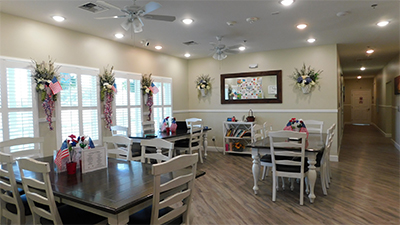
Edge cases are common. Consider a moms and dad with Parkinson's who does well in the early morning but needs near-constant aid by night. Some assisted living neighborhoods handle this gracefully with targeted staffing throughout peak hours and physical treatment collaborations. Others rely on household or third-party caretakers after 6 p.m., which alters the expense structure. Ask particularly about night care capacity.
For cognitive obstacles, the key question is safety paired with engagement. A person with mild amnesia can prosper in assisted living if the neighborhood offers discreet support and safe roaming safety measures. Once exit-seeking becomes active or nighttime disturbance grows, a move to memory care typically decreases tension for everybody. I have seen residents transform from nervous and withdrawn to relax and social after moving into a well-structured memory care program, merely because the environment matched their needs.
What To Search for on Tours, Beyond the Chandelier
Communities understand how to stage a lobby. Your task is to see past polished floors. Get here five to 10 minutes early and enjoy personnel interactions. Do they welcome citizens by name? Do citizens look groomed and unwinded? Smiles are easy to script; day-to-day rhythms are not.
The cooking area informs the truth. Ask if you can see lunch preparation. A well-run kitchen area in this area typically notes menus in plain language and honors resident favorites. Try to find variety beyond meatloaf Wednesdays. Ask whether they accommodate Tex-Mex preferences, which prevail, and whether spice levels and sodium can be adjusted for cardiac diets.
Talk to a nurse, not simply the sales director. Ask how the community deals with a resident who refuses a shower 3 days in a row, or who becomes agitated at sundown. The uniqueness of the answer matters. If they point out consistent staffing for trust-building, warm handoff strategies, or changing shower times to match resident preference, you are on the right track.
Watch the call-light board if they have one noticeable. Reaction times under ten minutes are solid for assisted living, though real life is variable. Ask to see current quality metrics if available, such as fall rates or healthcare facility transfer frequency. You may not get specific numbers, however the response reveals culture. Neighborhoods that track and talk about these metrics are usually the ones that keep improving.
The First 1 month After Move-In
Moves go much better when you deal with the very first month as an adjustment period. Bring familiar products: the chair where your dad checks out the Chronicle, framed photos from a fishing trip on Lake Conroe, a quilt your mom stitched. These signal safety.
Plan for a gentle schedule. Locals who say "I won't do activities" typically alter their minds if the very first few experiences are low-pressure. Encourage the neighborhood to start with individually invites instead of group statements. If your parent hates bingo, suggest alternatives a staff member can share, like early morning gardening or a short walk.
Monitor hydration and sleep closely in the very first 2 weeks. Falls and confusion can increase during shifts, particularly when fluid consumption dips or the sleep environment modifications. Ask staff to log intake and bedtime for a bit. The communities that do this voluntarily tend to catch concerns early.

If something feels off, speak out rapidly, and do it with specifics. "Mom's pills are off" is less valuable than "Mom utilized to take Synthroid very first thing on an empty stomach. Can we move it earlier?" Staff appreciate accurate requests and respond faster.
Respite As a Trial Run
If you are on the fence, a 2- to four-week respite stay can address the big questions without a full dedication. Frame it as a short experiment. Bring enough individual items to make it feel like home however prevent a complete relocation. Set clear goals: better sleep, consistent meals, a test of medication management, and maybe participation in 2 or three activities. At the end, review with the care group. If the stay went well, transferring to permanent residency ends up being a continuation rather of a new disruption.
Respite likewise supports caregivers. Caretaker burnout is genuine in every ZIP code from 77065 to 77379. A break now might prevent an emergency situation later on. Make the effort to rest or handle your own medical requirements. You will return steadier, and your loved one will pick up on that.
Planning for the What-Ifs
Even the best strategy needs a backup. If your loved one decreases, what is the path within the neighborhood? Does assisted living deal a step to memory care on the very same campus, or is that a different area? If you select a smaller care home in Klein, who handles on-call medical concerns at 2 a.m.? If evacuation is required throughout cyclone season, what is the procedure? After Typhoon Harvey, lots of neighborhoods fine-tuned their disaster strategies. Ask to see them.
Transportation can change as needs grow. Communities often offer scheduled rides for errands and appointments within a radius. For complex medical regimens, you may require private transportation with wheelchair ability. Draw up expenses and accessibility before you require it. The overlap of appointments along 249 and 1960 is a common choke point; construct buffer time.
Family characteristics will progress too. Decide who holds medical power of lawyer and who is the main contact for the community. Numerous frustrations stem from combined messages. A single point person, with brother or sisters cc 'd on updates, decreases friction.
An Uncomplicated Path to a Decision
You do not have to best every detail to move on. Aim for a solid 80 percent match and a neighborhood that owns problems when they arise. Here is a compact structure that has worked for lots of households:
- Define must-haves. Start with three: budget plan variety, area radius, and care capabilities for known needs. Tour at least 2 neighborhoods at various times of day. Early morning for energy, late afternoon for sundowning. Verify staffing and communication. Meet the nurse. Ask about overnight coverage and who calls you for what. Map the cash. Consist of care levels, not simply rent, and recognize repayment sources such as long-lasting care insurance coverage or VA Help and Attendance. Test, then dedicate. Use respite or a short-stay option when possible to minimize choice anxiety.
Closing Thoughts From the Field
Over the years, I have watched families agonize for months, just to discover that their loved one eats better, chuckles more, and sleeps through the night once the ideal supports remain in place. Assisted living is not giving up independence; done well, it disperses the problems that sap self-reliance. Memory care, when thoughtfully carried out, protects dignity and releases families to be partners and daughters again, not just task supervisors. Respite care holds the system together throughout transitions and advises caretakers that their wellness becomes part of the care plan.
Northwest Houston provides a large range of choices, from boutique residential homes in Champions to bigger communities with full calendars near Cypress. The very best option is the one that fits your moms and dad's rhythms and your household's realities. Start with a candid look at requirements, layer in the drive times and the dollars, and insist on a neighborhood that treats locals as entire people. When you see a group that knows names, adapts routines, and fixes issues without making you chase them, you will feel it. That is your green light.
Business Name: BeeHive Homes Assisted Living
Address: 16220 West Rd, Houston, TX 77095
Phone: (832) 906-6460
BeeHive Homes Assisted Living
BeeHive Homes Assisted Living of Cypress offers assisted living and memory care services in a warm, comfortable, and residential setting. Our care philosophy focuses on personalized support, safety, dignity, and building meaningful connections for each resident. Welcoming new residents from the Cypress and surround Houston TX community.
16220 West Rd, Houston, TX 77095
Business Hours
Monday thru Sunday: 7:00am - 7:00pm
Facebook: https://www.facebook.com/BeeHiveHomesCypress
BeeHive Homes Assisted Living is an Assisted Living Facility
BeeHive Homes Assisted Living is an Assisted Living Home
BeeHive Homes Assisted Living is located in Cypress, Texas
BeeHive Homes Assisted Living is located Northwest Houston, Texas
BeeHive Homes Assisted Living offers Memory Care Services
BeeHive Homes Assisted Living offers Respite Care (short-term stays)
BeeHive Homes Assisted Living provides Private Bedrooms with Private Bathrooms for their senior residents
BeeHive Homes Assisted Living provides 24-Hour Staffing
BeeHive Homes Assisted Living serves Seniors needing Assistance with Activities of Daily Living
BeeHive Homes Assisted Living includes Home-Cooked Meals Dietitian-Approved
BeeHive Homes Assisted Living includes Daily Housekeeping & Laundry Services
BeeHive Homes Assisted Living features Private Garden and Green House
BeeHive Homes Assisted Living has a Hair/Nail Salon on-site
BeeHive Homes Assisted Living has a phone number of (832) 906-6460
BeeHive Homes Assisted Living has an address of 16220 West Road, Houston, TX 77095
BeeHive Homes Assisted Living has website https://beehivehomes.com/locations/cypress
BeeHive Homes Assisted Living has Google Maps listing https://maps.app.goo.gl/G6LUPpVYiH79GEtf8
BeeHive Homes Assisted Living has Facebook page https://www.facebook.com/BeeHiveHomesCypress
BeeHive Homes Assisted Living is part of the brand BeeHive Homes
BeeHive Homes Assisted Living focuses on Smaller, Home-Style Senior Residential Setting
BeeHive Homes Assisted Living has care philosophy of “The Next Best Place to Home”
BeeHive Homes Assisted Living has floorplan of 16 Private Bedrooms with ADA-Compliant Bathrooms
BeeHive Homes Assisted Living welcomes Families for Tours & Consultations
BeeHive Homes Assisted Living promotes Engaging Activities for Senior Residents
BeeHive Homes Assisted Living emphasizes Personalized Care Plans for each Resident
People Also Ask about BeeHive Homes Assisted Living
What services does BeeHive Homes of Cypress provide?
BeeHive Homes of Cypress provides a full range of assisted living and memory care services tailored to the needs of seniors. Residents receive help with daily activities such as bathing, dressing, grooming, medication management, and mobility support. The community also offers home-cooked meals, housekeeping, laundry services, and engaging daily activities designed to promote social interaction and cognitive stimulation. For individuals needing specialized support, the secure memory care environment provides additional safety and supervision.How is BeeHive Homes of Cypress different from larger assisted living facilities?
BeeHive Homes of Cypress stands out for its small-home model, offering a more intimate and personalized environment compared to larger assisted living facilities. With 16 residents, caregivers develop deeper relationships with each individual, leading to personalized attention and higher consistency of care. This residential setting feels more like a real home than a large institution, creating a warm, comfortable atmosphere that helps seniors feel safe, connected, and truly cared for.Does BeeHive Homes of Cypress offer private rooms?
Yes, BeeHive Homes of Cypress offers private bedrooms with private or ADA-accessible bathrooms for every resident. These rooms allow individuals to maintain dignity, independence, and personal comfort while still having 24-hour access to caregiver support. Private rooms help create a calmer environment, reduce stress for residents with memory challenges, and allow families to personalize the space with familiar belongings to create a “home-within-a-home” feeling.Where is BeeHive Homes Assisted Living located?
BeeHive Homes Assisted Living is conveniently located at 16220 West Road, Houston, TX 77095. You can easily find direction on Google Maps or visit their home during business hours, Monday through Sunday from 7am to 7pm.How can I contact BeeHive Homes Assisted Living?
You can contact BeeHive Assisted Living by phone at: 832-906-6460, visit their website at https://beehivehomes.com/locations/cypress/,or connect on social media via Facebook
BeeHive Assisted Living is proud to be located in the greater Northwest Houston area, serving seniors in Cypress and all surrounding communities, including those living in Aberdeen Green, Copperfield Place, Copper Village, Copper Grove, Northglen, Satsuma, Mill Ridge North and other communities of Northwest Houston.